The Okavango Delta is one of the last great wildernesses in Africa, and Botswana has chosen to protect it with a "high value, low volume" approach: small camps, limited vehicles and high prices. This guide explains how to plan a trip that fits your budget — from a day trip out of Maun to a week in fly-in camps.
How long do you need?
- One day — a mokoro day trip or a scenic flight from Maun. Enough to see what the delta is, not enough to see its wildlife at its best.
- Three to four days — a camping safari in Moremi or the delta, or two camps of two nights each. The minimum we recommend.
- A week — the delta plus Chobe or the Makgadikgadi. The classic Botswana trip.
- Ten days or more — add Victoria Falls, the Central Kalahari or a longer mobile safari through Savuti and Khwai.
Fly-in camps vs mobile and self-drive safaris
Fly-in camps sit in private concessions in the inner delta. They are small (often 8–12 tents), luxurious and all-inclusive, with activities tailored to the water — mokoro, boating, walking and game drives. Expect prices from several hundred to several thousand euros per person per night.
Mobile safaris move a tented camp by road through Moremi, Khwai and beyond, with a guide and crew. You get the same wildlife with simpler comforts at a fraction of the price. Self-drive is cheaper again, but demands 4x4 experience and careful planning.
What to see
 The Okavango Delta & Moremi
Okavango Delta
The river that never reaches the sea
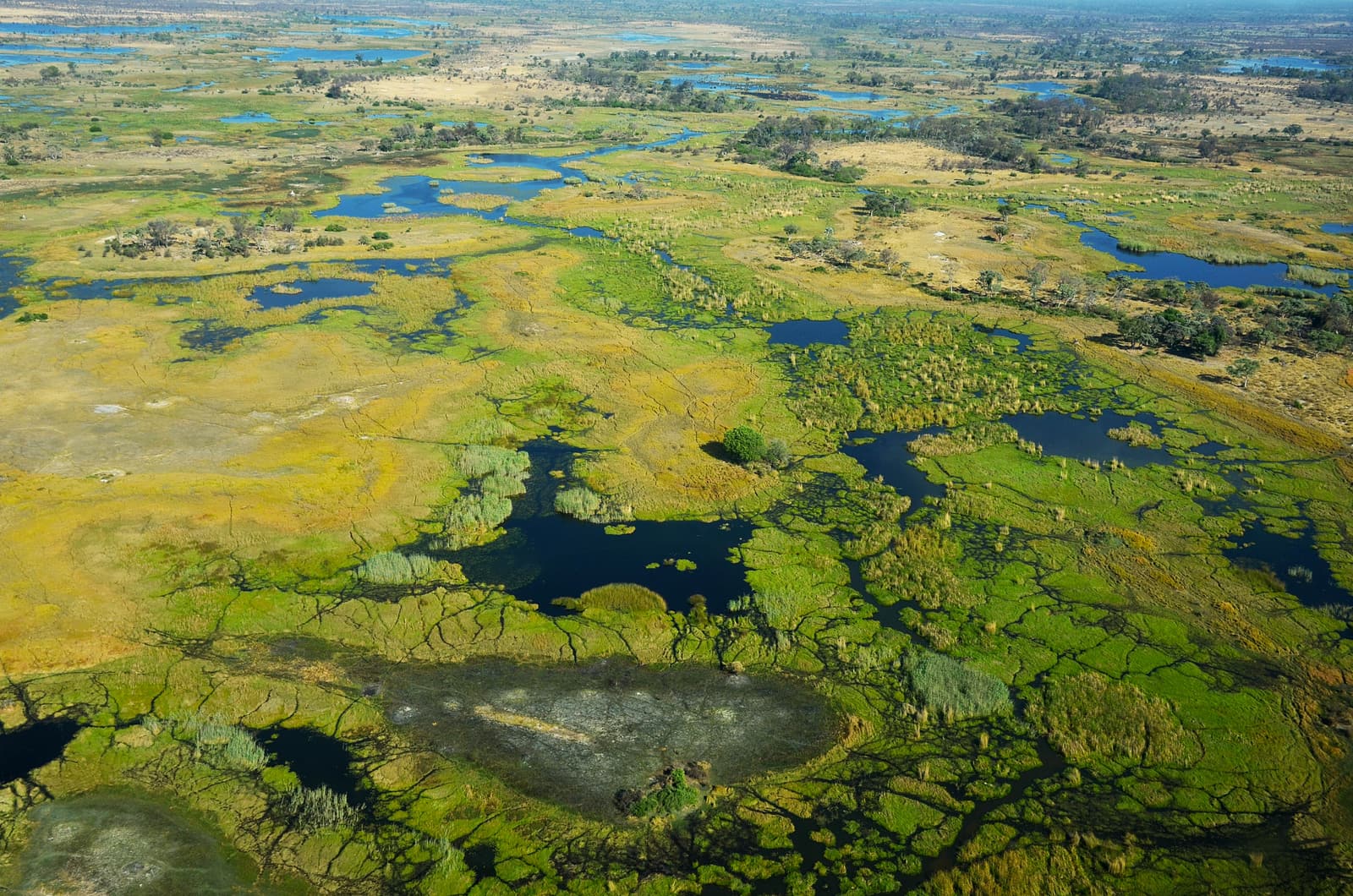
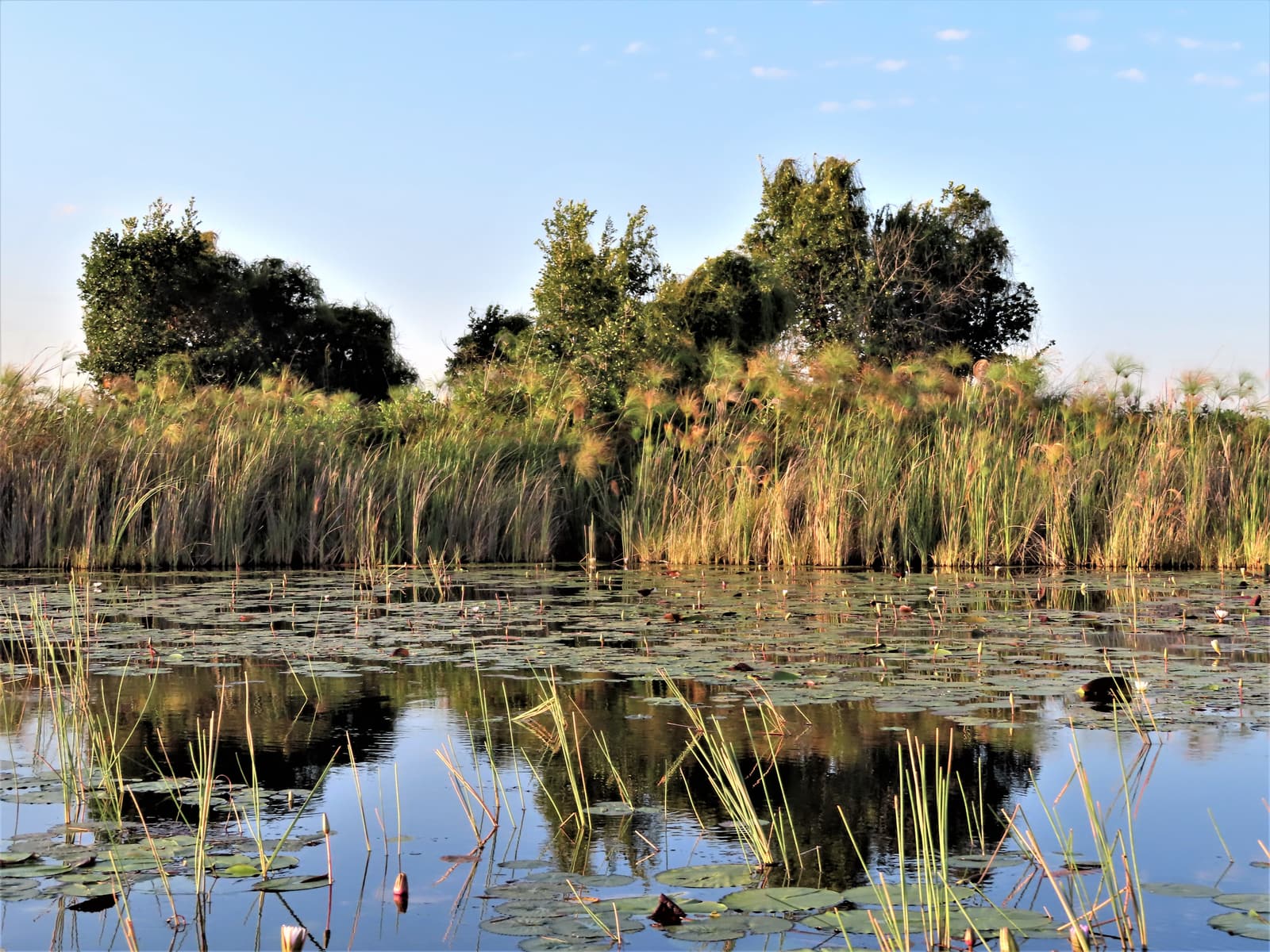
The Okavango rises in the Angolan highlands and spills into the Kalahari sand instead of the ocean, spreading into a fan of channels, lagoons and islands the size of a small country. UNESCO listed it in 2014 as the world’s 1,000th World Heritage Site. Explore it by mokoro, by boat, on foot and from the air.
 The Okavango Delta & Moremi
Moremi Game Reserve
The delta’s protected heart
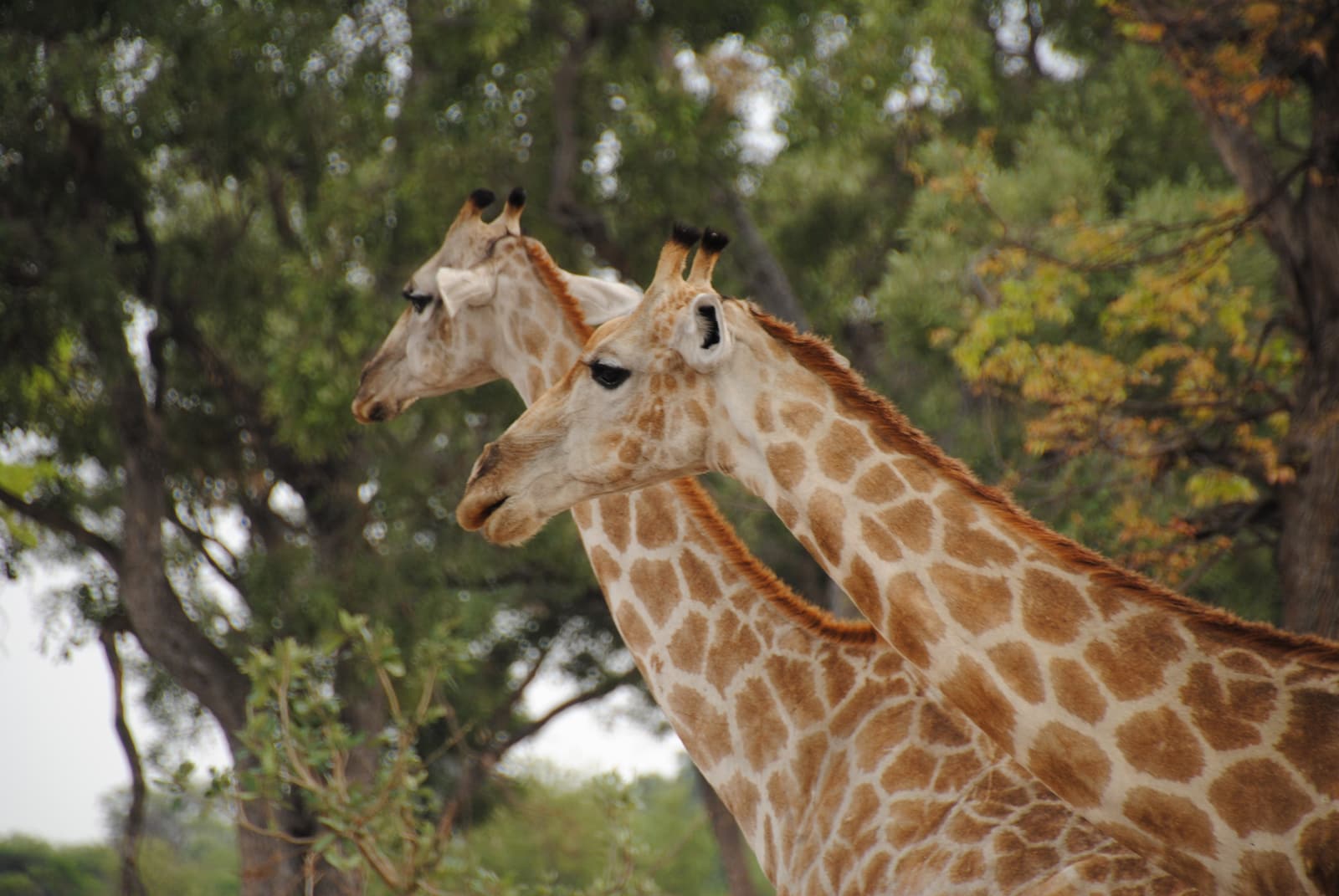
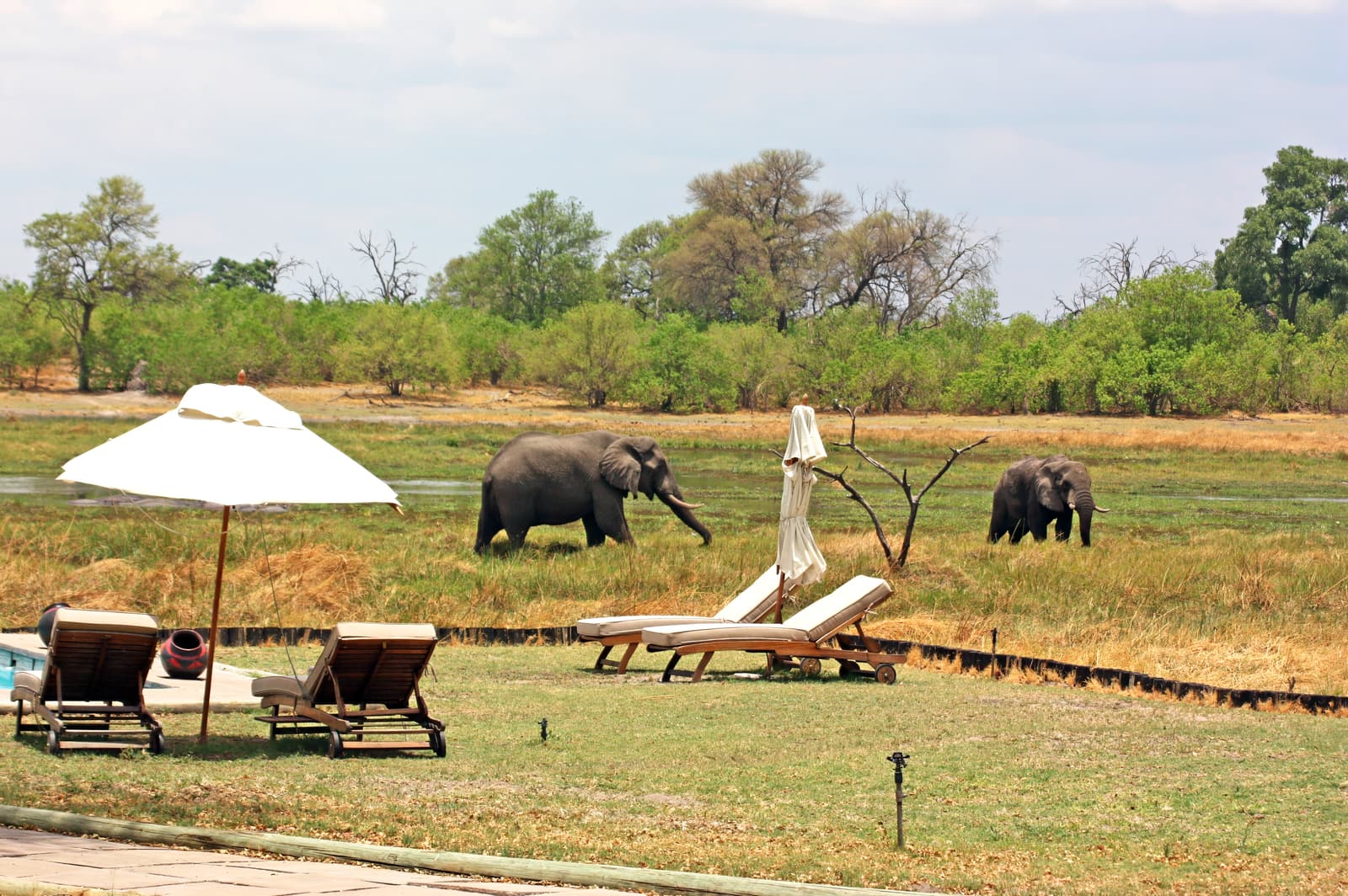
Covering much of the eastern delta, Moremi combines permanent swamp, seasonal floodplain and dry mopane woodland — which is why it holds such a range of wildlife. It is one of the best places in Africa to see African wild dog, alongside lion, leopard, elephant, buffalo and hundreds of bird species. Reachable by road from Maun.
 The Okavango Delta & Moremi
Khwai
Moremi’s wilder neighbour
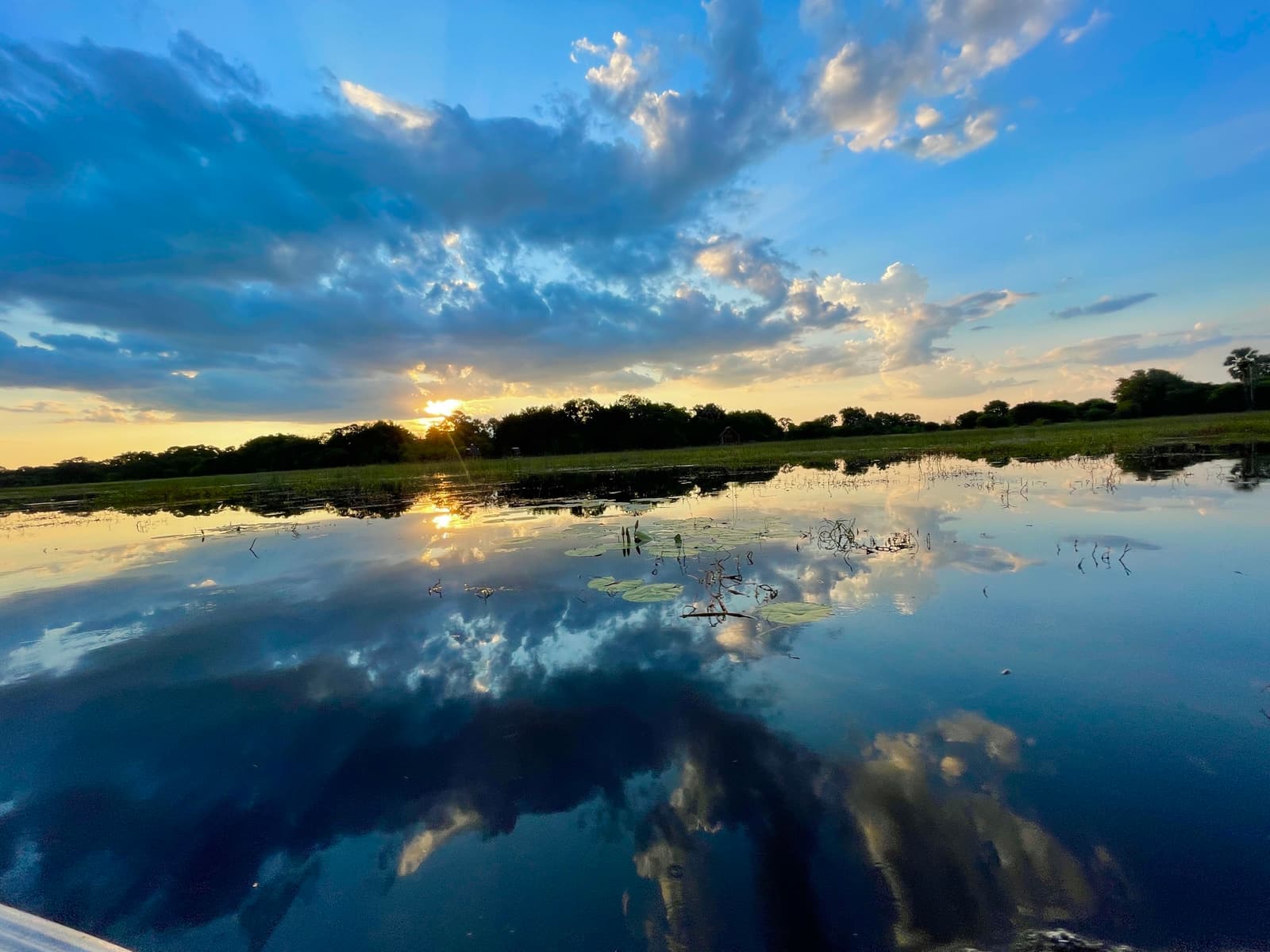
The Khwai River forms the northern boundary of Moremi, and the community-run concession on its far bank offers the same wildlife with more freedom: night drives, bush walks and off-road tracking are all possible here. Famous for leopard, wild dog and big elephant herds in the dry season.
 The Okavango Delta & Moremi
Maun
Gateway to the delta
A spread-out frontier town on the Thamalakane River, Maun is where almost every Okavango safari begins: the airport handles a steady stream of light aircraft into the camps, and the town has the supermarkets, 4x4 hire, mokoro operators and riverside lodges you need before heading out.
See all of them, with directions and tours, in our places to see guide.
What it costs
Botswana is one of Africa’s more expensive safari destinations. Typical price ranges (per person, indicative):
| Item | Typical price |
|---|---|
| Sunset mokoro trip near Maun | ≈€50 |
| Full-day mokoro trip from Maun | ≈€150–220 |
| Scenic flight (45–60 minutes) | ≈€295–520 |
| Moremi day safari from Maun | ≈€280–520 |
| 3–4 day camping safari | ≈€1,000–1,500 |
| Maun lodge double, per night | ≈€45–140 |
| Fly-in camp, per person per night | From several hundred to €2,000+ |
| National park fees (Moremi, Chobe) | Charged per person per day — check current rates |
Wildlife
The delta is home to large populations of elephant and buffalo, as well as lion, leopard, cheetah, spotted hyena and one of Africa’s most important populations of African wild dog. Water-adapted antelope such as red lechwe and the elusive sitatunga are specialities, and more than 400 bird species have been recorded, from the African fish eagle to Pel’s fishing owl and the wattled crane.
Health: malaria and more
The Okavango Delta, Chobe and the north of Botswana are malaria areas, with the highest risk in the rainy season (roughly November to April). Consult a travel clinic about prophylaxis well before you go, and use repellent, long sleeves and nets. Ask too about routine vaccinations; if you are arriving from a yellow-fever country, you may need a certificate.
What to pack
- A soft-sided bag within the light-aircraft limit (typically ~20 kg including hand luggage).
- Neutral clothing — khaki, olive, beige. Avoid bright colours and, in tsetse areas, dark blue and black.
- Warm layers for June–August: early-morning drives can be close to freezing.
- Binoculars, a camera with a zoom lens, spare batteries and a headlamp.
- Sun protection — hat, sunglasses, sunscreen — and insect repellent.
- A universal adapter: Botswana mostly uses the South African type M and British type G sockets.
Practical details
- Money: Botswana pula (BWP). Cards are widely accepted in Maun; carry cash for tips. US dollars are often accepted for tips at camps.
- Visas: many nationalities, including EU and UK citizens, can visit Botswana visa-free for short stays — check current rules for your passport.
- Tipping: customary for guides, polers and camp staff; camps usually suggest amounts.
- Language: English is an official language and the language of guiding; Setswana is widely spoken.
- Safety: Botswana is one of Africa’s most stable countries. The real risks are wildlife — always follow your guide’s instructions, especially on foot and on the water.
Common mistakes
- Packing a hard suitcase — it will not fit on a light aircraft.
- Seeing only the water. Combine the delta with a land area such as Moremi or Khwai for predators.
- Booking too late for July–September. The best camps sell out a year ahead.
- Forgetting that it gets cold. Winter mornings in an open vehicle are freezing.
- Skipping malaria advice.